Finalrentals Blog

Published in Trips Category.
If you're staying on the coast and wondering whether a safari is worth the effort, here's your answer: Tsavo national park safari territory starts less than two hours from Mombasa. Not six hours. Not a flight away. Two hours on a decent road, and you're watching elephants the colour of red clay move through acacia scrub like they own the place, which, of course, they do.
Most coastal visitors never make it inland. That's a shame, because Tsavo East and West together form one of the largest protected wildlife areas on the planet. You don't have to choose between them, either. With a self-drive rental and two days to spare, you can do both.
Which Park Should You Visit First?

This is the question that trips people up, and honestly, the answer depends on what you want to see first.
Starting with Tsavo East makes logistical sense for most people coming from Mombasa. The main gate at Voi is roughly 150km northwest of the city, about two hours via the A109 Nairobi highway. Tsavo East is flatter, more open, and easier to navigate independently. The signature attraction here is the red elephants: huge herds that roll in the volcanic red dust until their skin turns russet. It's one of Kenya's most arresting wildlife sights, and you're likely to see it within the first hour of entering.
Tsavo West, by contrast, rewards a slightly slower pace. The terrain is more dramatic, volcanic hills, lava flows, the extraordinary Mzima Springs where hippos and crocodiles share crystal-clear water. Roads are rougher in places, and you'll want a 4x4 if you're planning to explore beyond the main circuits. But the scenery is magnificent, and the Chyulu Hills in the background give the whole place a different character to anywhere else in Kenya.
The Two-Park Route That Works
The cleanest way to do both is to enter Tsavo East through the Voi Gate on day one, spend the afternoon game driving, overnight inside the park or in Voi town, then exit via the Mtito Andei Gate the following morning. From Mtito Andei, you cross the A109 highway and enter Tsavo West through its Mtito Andei Gate, the two parks share this town as a crossing point, which makes the transition seamless.
Allow a full morning in Tsavo West before heading back toward the coast or continuing north to Nairobi.
Driving Conditions and What You'll Need
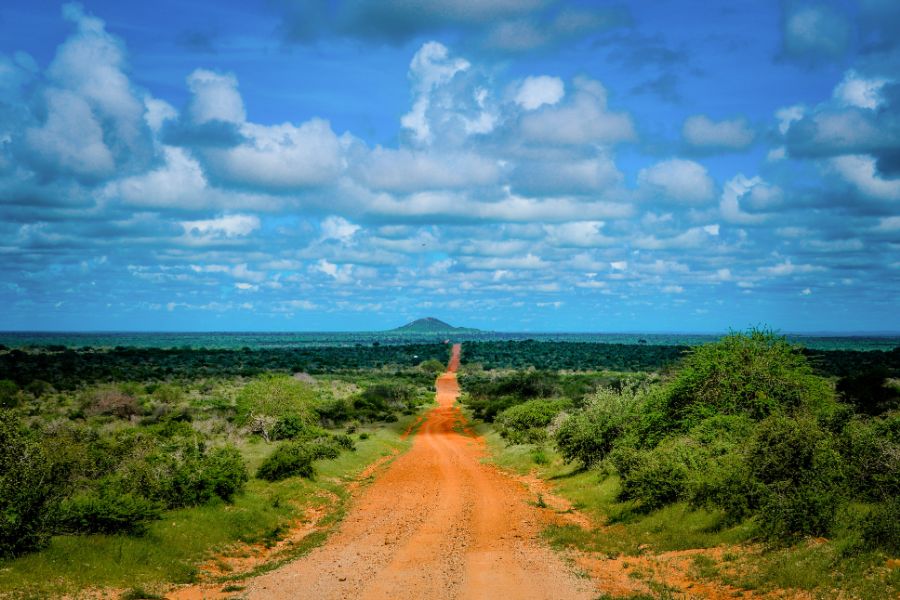
The A109 between Mombasa and Voi is tarmac all the way and in reasonable condition. Allow two to two and a half hours from Mombasa, depending on traffic leaving the city. Keep fuel in mind, fill up in Mombasa or Voi before entering, since there are no fuel stations inside either park.
Does national park tsavo require a 4x4?
In Tsavo East, a standard saloon car will get you around the main game-viewing circuits without drama, particularly in the dry season. Tsavo West is more demanding. Some tracks, especially around Ngulia and deeper into the western sector, are badly corrugated or cross seasonal riverbeds. If you're planning to explore properly, a 4x4 is strongly recommended. If budget is tight, a high-clearance vehicle will manage most of the popular routes.
For vehicle options suited to longer self-drive safaris, the Kenya self-drive safari planning guide covers exactly what to look for, including whether a pop-up roof matters more than you'd think.
Park Fees and Entry
Both parks charge daily conservation fees, collected by Kenya Wildlife Service (KWS). International visitors pay in USD; fees apply per person per day and per vehicle. Keep your receipts, rangers may ask to see them at internal checkpoints. Book online via the KWS eCitizen portal before you travel if possible, especially during peak season.
The Red Elephants: What You Actually Need to Know

The famous "red elephants" of tsavo east national park in kenya aren't a separate subspecies, they're the same African bush elephants found across the continent. What makes them look different is the iron-rich volcanic red soil they habitually dust-bathe in. The colour transfer is striking and strangely beautiful.
Tsavo East hosts one of Kenya's largest elephant populations. Sightings are genuinely common, particularly around the Galana River corridor in the afternoon. You may also encounter lions, leopards, buffalo, gerenuk, and the endangered Hirola antelope, a species found almost nowhere else.
If you're approaching from Moi International Airport in Mombasa, picking up your rental car on arrival means you can head straight out on the A109 early the next morning and be inside Tsavo East before 9am, which is exactly when you want to be there.
Planning Your Tsavo Safari: Practical Notes
The dry seasons, January to March and July to October, offer the best game-viewing visibility, since vegetation thins and animals concentrate around water sources. The long rains (April–May) can make certain tracks impassable and are best avoided for self-drive trips.
Accommodation options range from budget-friendly KWS bandas inside the parks to mid-range tented camps and lodges. If you're wild camping, you'll need to pre-book a designated site. Several lodges near the Voi and Mtito Andei gates cater specifically to road-trippers who want a comfortable bed without tying themselves to a full lodge package.
For families or groups managing luggage alongside camping kit and camera bags, a 7-seat SUV offers the kind of loading space that makes a two-day safari considerably less stressful. The guide to 7-seat rental cars in Kenya has practical recommendations for larger groups.
Worth the Drive from the Coast

Mombasa is a brilliant base. But spending your whole trip on the beach when Tsavo East and West national parks are two hours away would be a genuine missed opportunity. The red elephants alone are worth the trip, but the landscape, the scale of the parks, and the quiet of a self-drive morning in the bush are the kind of experiences that tend to stay with you long after the tan fades.
Book your vehicle, check KWS fees online, fuel up at Mombasa, and head inland. Tsavo doesn't disappoint.