Finalrentals Blog


Published in Guides Category.
Kenya is one of Africa’s most captivating travel destinations, celebrated for its dramatic landscapes, vibrant cultures, and extraordinary wildlife. From ancient archaeological sites to protected national parks and historic coastal towns, the country’s UNESCO World Heritage Sites offer a unique glimpse into both its natural wonders and rich cultural history.
Exploring Kenya by road lets travellers experience the country at their own pace, enjoying the changing scenery and stopping wherever something sparks their interest. Many visitors choose to rent a car in Kenya, with Final Rentals allowing them to secure a vehicle in advance and start their journey without any delays. With so many incredible sites to discover, knowing what makes each UNESCO location special can help plan a journey that captures the very best of Kenya.
Why a Road Trip Is the Best Way to Explore Kenya
Exploring Kenya by road offers a richer, more flexible way to see the country. While flights and tours cover major destinations, they often miss small towns, scenic viewpoints, and cultural encounters. A road trip also reveals dramatic landscapes, from wildlife-filled savannahs to lush highlands, volcanic valleys, and the tropical coast.
Driving lets travellers stop whenever something catches their eye, whether to photograph wildlife, browse markets, or enjoy panoramic views. Many UNESCO World Heritage Sites lie outside urban areas, so renting a car in Kenya makes them easier to reach, allowing visitors to linger longer and discover hidden gems beyond traditional routes.
Understanding Kenya’s UNESCO World Heritage Sites
Kenya’s UNESCO World Heritage Sites showcase the country’s remarkable blend of natural wonders and cultural heritage. Recognised for their outstanding universal value, these sites are protected to preserve their environmental, historical, and cultural importance. From soaring mountains and wildlife-rich lakes to historic coastal towns and ancient settlements, each location gives travellers a unique chance to experience Kenya’s diverse landscapes and rich history.
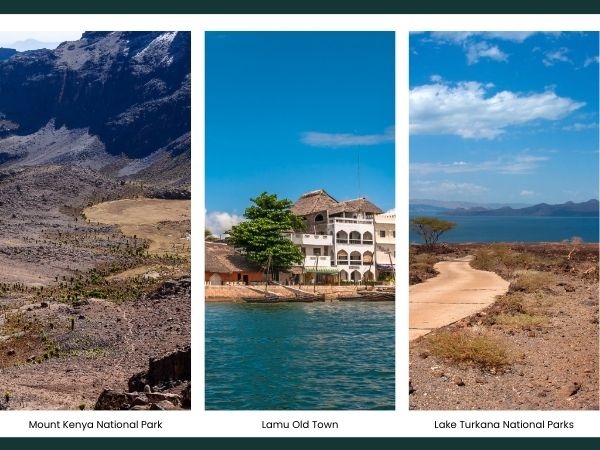
Mount Kenya National Park
Mount Kenya National Park is one of Kenya’s most famous UNESCO World Heritage Sites and surrounds the majestic peak of Mount Kenya, the second-highest mountain in Africa. Rising dramatically above the surrounding landscape, the mountain is covered with forests, glaciers, and alpine vegetation that support a rich ecosystem. Visitors exploring the park’s scenic trails may encounter wildlife such as elephants, buffalo, monkeys, and rare bird species while enjoying panoramic mountain views.
Lamu Old Town
Lamu Old Town, located on Kenya’s northern coast, is one of the oldest and best-preserved Swahili settlements in East Africa. Its narrow winding streets, coral stone buildings, wooden balconies, and intricately carved doors reflect centuries of cultural exchange between African, Arab, Persian, and Indian communities. Walking through the town feels like stepping back in time, as traditional architecture and ways of life have remained largely unchanged for generations.
Lake Turkana National Parks
Lake Turkana National Parks lie in a remote region of northern Kenya and are often referred to as the “Cradle of Humankind” because of the important fossils discovered there. These findings have contributed greatly to understanding early human evolution. The surrounding landscape is dramatic and rugged, featuring desert plains, volcanic formations, and the vast turquoise waters of Lake Turkana, creating one of the most striking environments in East Africa.

The Lake System in the Great Rift Valley
The Lake System in the Great Rift Valley is another UNESCO World Heritage Site known for its exceptional biodiversity and remarkable birdlife. It includes lakes such as Nakuru, Bogoria, and Elementaita, which support a wide variety of wildlife. These lakes are especially famous for the thousands of flamingos that gather along their shores, creating spectacular natural scenes that attract photographers and nature enthusiasts from around the world.
Thimlich Ohinga Archaeological Site
Thimlich Ohinga Archaeological Site, located in western Kenya, is an ancient stone settlement built centuries ago without the use of mortar. The site features large stone enclosures and defensive walls that demonstrate impressive engineering skills developed by early communities in the region. Today, Thimlich Ohinga provides valuable insight into Kenya’s historical architecture and cultural traditions, making it one of the country’s most fascinating archaeological landmarks.
Planning the Ideal Road Trip Route
Planning an efficient route is an important part of visiting multiple UNESCO World Heritage Sites across Kenya. Because these sites are spread across different regions, travellers often begin their journey in Nairobi, which serves as the country’s main transport hub. Nairobi has well-developed roads, international flight connections, and convenient access to vehicle rental services, making it the ideal starting point for a road trip.
From Nairobi, many travellers begin by driving north toward Mount Kenya National Park, where the cooler highland climate and dramatic mountain scenery provide an excellent introduction to Kenya’s natural beauty. After exploring the mountain region, the journey may continue west into the Great Rift Valley, where travellers can visit the lakes that form part of the UNESCO-listed lake system.
Travellers interested in Kenya’s ancient history can drive further west to visit the Thimlich Ohinga Archaeological Site, located near Lake Victoria. The journey through this region takes you past farmland, rural villages, and scenic countryside, offering a glimpse into a quieter side of Kenya’s culture and everyday life.
More adventurous travellers may choose to drive north toward the remote landscapes surrounding Lake Turkana National Parks, where volcanic terrain and desert scenery create one of the most unique environments in East Africa. Some road trips eventually end along the coast at Lamu Old Town, where travellers can relax while exploring centuries of Swahili history and architecture.
Preparing Documents and Travel Essentials
Before setting out on a road trip in Kenya, travellers should ensure all necessary documents and permits are prepared. Being organised helps avoid delays and makes the journey more enjoyable.
- Driving Documentation: A valid driving licence is required to drive legally. Many international visitors also carry an International Driving Permit to simplify identification. Keep your rental agreement, insurance papers, and personal ID easily accessible throughout the trip.
- Park and Heritage Site Permits: Some UNESCO locations require entry permits or conservation fees: researching and preparing these details in advance helps travellers avoid delays and ensures smooth access to protected sites.
Navigation and Road Awareness

Navigation plays a major role in successful road travel across Kenya. Many drivers rely on GPS navigation systems or smartphone apps to guide them through unfamiliar regions. However, signal coverage can become unreliable in remote areas, particularly when travelling near mountains or desert landscapes.
For this reason, travellers often carry offline maps or printed road atlases as a backup. Understanding the distance between towns is also helpful because petrol stations may be limited in certain regions. Planning fuel stops ahead of time ensures that drivers do not encounter difficulties when travelling through isolated areas such as those near Lake Turkana National Parks.
Safety and Emergency Preparation
Ensuring safety is a top priority when planning a road trip across Kenya, especially given the country’s diverse terrain and climate. Proper preparation helps travellers manage emergencies and stay comfortable during long journeys.
- Emergency Equipment: Ensure your vehicle has a spare tyre, tyre repair kit, flashlight, and basic tools. A first aid kit is also essential for minor injuries during outdoor exploration.
- Food and Hydration: Carry enough drinking water and snacks for the journey. High temperatures and dry conditions in some regions make staying hydrated crucial.
- Travel Notifications: Share your travel route with a friend or family member. Informing someone of your plans ensures help can be arranged if unexpected situations occur.
Packing Clothing and Travel Gear
Kenya’s climate varies greatly depending on altitude and location. Areas near Mount Kenya National Park can be cool in the mornings and evenings, while coastal regions like Lamu Old Town are usually warm and humid during the day. Travellers should pack clothing in layers, such as a light t-shirt, a long-sleeve shirt, and a jacket, so they can easily adjust to changing temperatures throughout the journey.
Comfortable walking shoes are important because many UNESCO sites involve walking through historic areas, archaeological ruins, or nature trails. Travellers should also pack sun protection items such as sunscreen, sunglasses, and hats to protect themselves from strong sunlight when exploring outdoor locations.
Choosing the Right Vehicle for the Journey
Selecting the right vehicle can greatly improve the comfort and safety of your road trip across Kenya. Major highways between large cities are generally paved and well-maintained, but roads leading to remote parks or archaeological sites may include gravel sections or uneven terrain.
For travellers planning to explore remote destinations or national parks, a four-wheel-drive vehicle is often recommended because it offers better traction and stability on rough roads. Families or groups travelling long distances may prefer larger SUVs for additional comfort and luggage space.
When travellers rent a car in Kenya, they can choose from a variety of vehicles to suit their travel plans, and Final Rentals makes it easy to compare options and select the best one for the road trip.
Responsible Travel at Heritage Sites
Visiting UNESCO World Heritage Sites carries a responsibility to protect these valuable locations for future generations. Travellers should respect local communities, cultural traditions, and environmental guidelines while exploring historic and natural areas. In places such as Lamu Old Town, visitors are encouraged to respect local customs and support local businesses that help preserve traditional culture.
In natural environments such as Mount Kenya National Park, travellers should follow designated trails and avoid disturbing wildlife. Responsible tourism ensures that these remarkable destinations remain protected and accessible for future travellers.
Renting a Car for Your Kenya Road Trip

For visitors planning to explore multiple UNESCO sites, renting a car in Kenya provides both convenience and flexibility. A rental vehicle allows travellers to move comfortably between destinations and visit lesser-known or hidden attractions along the way. Final Rentals makes it easy to compare vehicles, check availability, and secure a rental before arrival, saving time and ensuring the car is ready when the journey begins.
Downloading the Final Rentals app, available on Google Play and the App Store, also helps travellers manage reservations, view rental details, and access helpful tools throughout the road trip.
Unforgettable Kenya Road Trip to UNESCO Sites
A road trip through Kenya offers a unique opportunity to experience the country’s UNESCO World Heritage Sites while exploring its diverse landscapes and cultures. From the towering slopes of Mount Kenya National Park to the historic streets of Lamu Old Town, each destination reveals an important part of Kenya’s heritage.
With proper planning, a detailed travel checklist, and a reliable vehicle, travellers can enjoy a safe and memorable journey across one of Africa’s most fascinating destinations. Renting a car lets visitors explore beyond typical tourist routes and uncover Kenya’s hidden treasures. Book your vehicle today to start your adventure!
Frequently Asked Questions
How many UNESCO World Heritage Sites are there in Kenya?
Kenya has several UNESCO World Heritage Sites, including Mount Kenya National Park, Lamu Old Town, Lake Turkana National Parks, and Thimlich Ohinga Archaeological Site.
Is a road trip a good way to explore Kenya?
Yes, travelling by road allows visitors to experience Kenya’s diverse landscapes, wildlife areas, and cultural destinations more freely than many organised tours.
Do I need a special licence to drive in Kenya?
Most travellers need a valid driving licence, and many carry an International Driving Permit when they rent a car in Kenya.
What vehicle is best for travelling across Kenya?
SUVs or four-wheel-drive vehicles are often recommended, especially when visiting national parks or remote regions.
When is the best time for a road trip in Kenya?
The dry seasons between June and October and from January to February are usually the best times for road travel and wildlife viewing in Kenya.